2026-10-22 · Derek Harlan
Denver Dumpster Sizing Guide for Common Home Projects
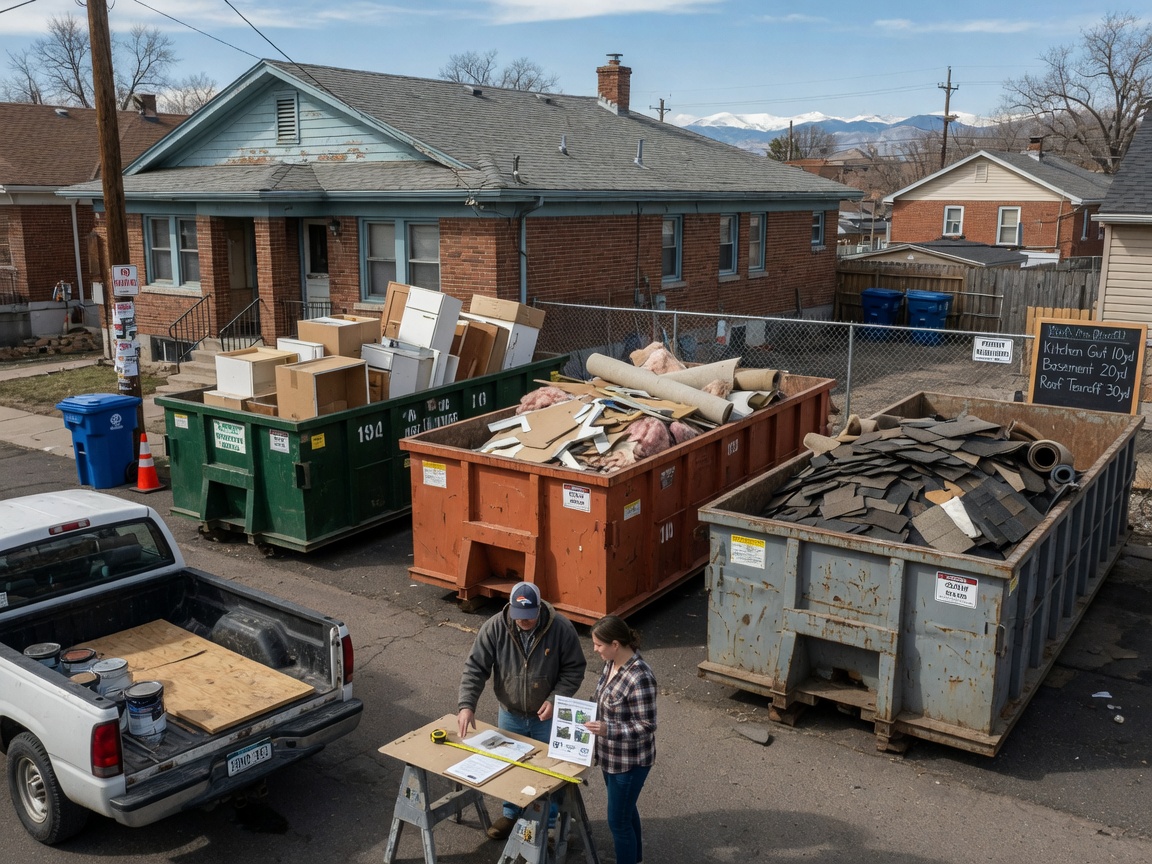
For most Denver home projects a 10-yard or 20-yard dumpster handles the typical debris load from a single-room remodel or moderate yard cleanup while a 30-yard unit fits larger roof or whole-home jobs. Project scale, material type, and site access in neighborhoods like Capitol Hill or Highland determine the exact choice.
Kitchen and Bath Remodel Dumpster Sizes
Older homes in Capitol Hill and Five Points often feature plaster walls and tile that generate dense waste, so a 10-yard dumpster suits a standard bathroom update while a full kitchen gut in a Washington Park bungalow usually requires a 20-yard unit. Homeowners in RiNo lofts with open layouts may need the larger size sooner because modern cabinetry and quartz scraps take more space than older wood trim. Afternoon thunderstorms common in Denver summers can wet down debris piles, increasing weight and sometimes forcing crews to split loads across two smaller containers rather than one oversized roll-off. Placement on narrow alleys behind Baker row houses further limits options to 10-yard or 20-yard models that fit without blocking driveways. Checking load height before the truck arrives prevents overage fees that appear when wet drywall pushes past the rim.
Roof Replacement and Exterior Projects
Asphalt shingle tear-offs from a typical Denver County ranch in Montclair or Park Hill fill a 20-yard dumpster for a 1,500-square-foot roof, while larger two-story homes in Cherry Creek often call for a 30-yard unit plus a second container for underlayment and flashing. Hail damage after spring storms accelerates these jobs and produces extra volume from damaged gutters and fascia. Crews working near Coors Field or Union Station must coordinate street permits early because sidewalk placement is restricted. A 20-yard container stays manageable on sloped driveways common in Sunnyside, whereas a 40-yard roll-off risks tipping on the same grade. Local crews stage the dumpster on plywood sheets to protect concrete from the concentrated weight of bundled shingles.
Yard Cleanups and Landscaping Debris
Tree trimming around City Park or Denver Botanic Gardens generates branches and sod that compact poorly, so a 10-yard dumpster works for routine pruning while a full lot clearing in Stapleton needs a 20-yard or 30-yard unit. Semi-arid soil conditions mean root balls stay drier and lighter than in wetter climates, allowing slightly more volume per load. Homeowners in Highland often combine fence removal with sod replacement and book the 20-yard size to keep everything on one truck. Cold winter ground in Lakewood and Aurora freezes deeper, making excavation slower and sometimes requiring an extra small container for frozen material that cannot be mixed with lighter yard waste.
Placement and Access Realities in Denver
Narrow lots in LoDo and tight alleys behind RiNo buildings limit roll-off width to models under 8 feet, which rules out many 40-yard options. Street-use permits become necessary when the container sits in the right-of-way, especially on busy corridors near the Denver Art Museum. How to Get a Street Use Permit for Dumpster Placement in Denver outlines the exact steps for Capitol Hill and Baker residents. Winter snow accumulation in Park Hill and Montclair requires extra clearance around the container so the truck can hook and lift without sliding. Managing Snow and Access for Winter Dumpster Rentals in Denver explains how crews handle these conditions. Homeowners in Aurora and Centennial often choose Residential Dumpster Rental because the provider already knows which sizes fit standard driveways in those subdivisions.
Matching Size to Project Timeline
A single 20-yard dumpster typically serves a two-week kitchen project in Denver County when debris is loaded steadily each day. Extending the rental past the initial period during heavy thunderstorm weeks may require swapping containers to avoid weight limits on saturated material. Crews recommend ordering one size larger than the estimate when the job involves both interior gutting and exterior demolition, because mixed loads do not compact as efficiently. This approach keeps the project moving without repeated truck trips across town.