2026-10-22 · Derek Harlan
How to Get a Street Use Permit for Dumpster Placement in Denver
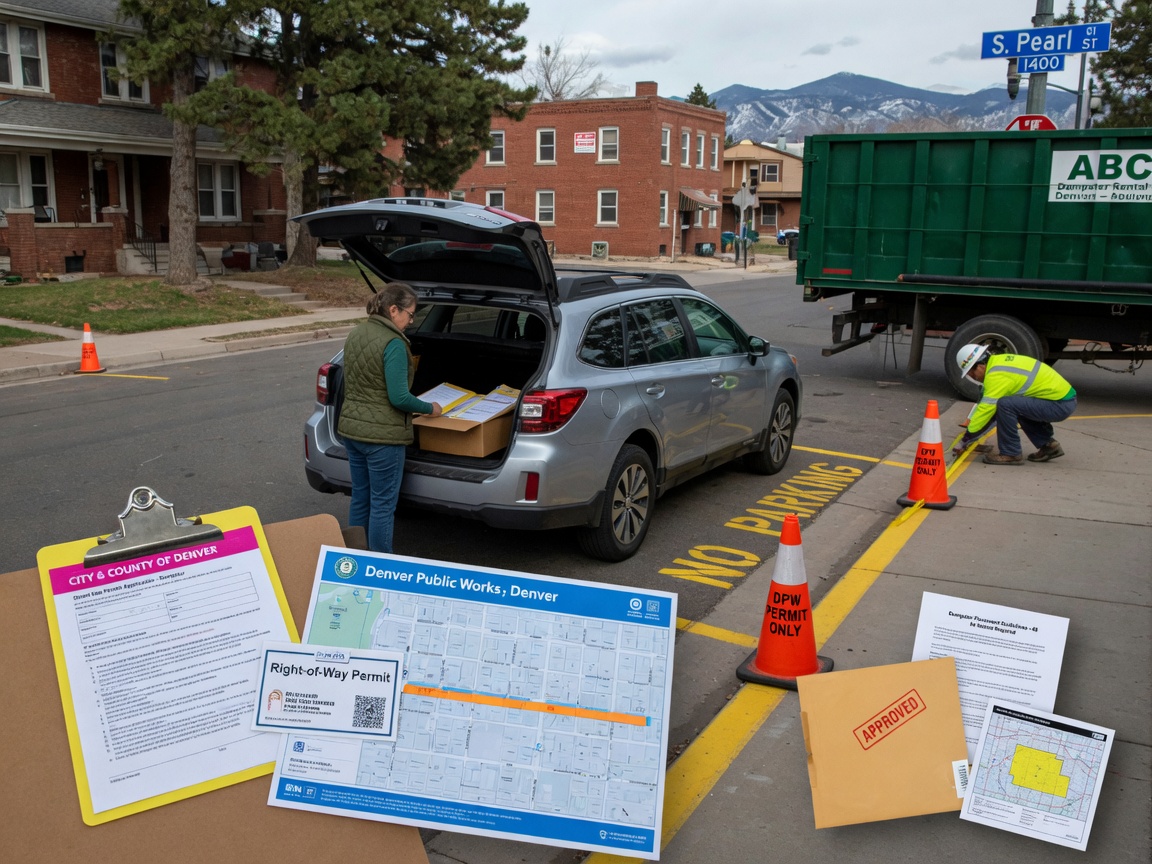
In Denver County you apply for a street use permit through the Department of Transportation and Infrastructure before positioning any dumpster on public streets in areas such as Capitol Hill, Highland, or LoDo. Expect to provide site address, dumpster dimensions, placement dates, and traffic control plans, with approvals often taking five to ten business days depending on the block and season.
Understanding Denver Street Use Rules
Denver enforces strict rules on temporary obstructions in the public right-of-way because narrow streets in older neighborhoods like Baker, Five Points, and Washington Park leave little room for parked vehicles or emergency access. A street use permit keeps projects legal and prevents daily fines that can reach several hundred dollars. The requirement applies whether the job sits in front of a 1920s bungalow in Park Hill or a new build in Stapleton. Local crews know that alleys in RiNo and Cherry Creek often cannot accommodate roll-off trucks, forcing street placement and therefore a permit. Without it, work stops until the paperwork clears.
Preparing the Permit Application
Gather the property address, exact placement sketch showing distance from intersections and fire hydrants, dumpster size, and expected duration before starting the online or in-person application. Include proof of insurance naming the city and a traffic control plan using cones or barriers. Residents in Montclair and Sunnyside often need additional photos because angled streets create sight-line concerns. Submit during business hours at 5160 Blackhawk Wy or through the city portal to avoid delays. Double-check that the dumpster provider lists the correct dimensions so the permit matches the actual unit delivered.
Placement Realities in Denver Neighborhoods
Terrain and housing stock change the job on the ground. Capitol Hill and LoDo feature tight curbs and frequent utility covers that limit where a 20-yard container can sit without blocking driveways. In Cherry Creek and Washington Park, mature trees and irrigation lines require extra care when the truck lowers the dumpster. Newer streets in Stapleton allow easier access but still need the permit because of strict HOA and city overlap. Crews serving Aurora, Lakewood, and Centennial note that Denver County reviews move slower than suburban counties, so schedule the permit two weeks ahead of delivery.
Weather and Seasonal Factors
Semi-arid conditions bring hot summers that soften asphalt and cold winters that leave snow banks narrowing usable curb space. Frequent afternoon thunderstorms can turn dirt lots into mud, making stable placement harder in areas like Baker and RiNo. Winter projects in Five Points and Park Hill require extra clearance for snow removal equipment, which is why many operators review the managing snow and access guide before finalizing dates. Permit inspectors pay closer attention during storm season because blocked storm drains create flooding complaints.
Coordinating Delivery with Your Provider
Share the approved permit number with the rental company so the driver knows exactly where to set the unit and how long it can stay. Residential Dumpster Rental teams familiar with Denver County routes can flag common issues such as low branches on Montclair streets or steep approaches near Mount Evans views. Pair the permit step with the Denver Dumpster Sizing Guide for Common Home Projects to avoid ordering the wrong capacity and needing a second permit revision. For winter jobs, reference the Managing Snow and Access for Winter Dumpster Rentals in Denver article to plan around plowing schedules.